Europe Jazz Media Chart - March 2026

A selection of the hot new music surfacing across the continent this month by the top European jazz magazines and websites.

Jacek Brun, Jazz-fun.de (Germany)

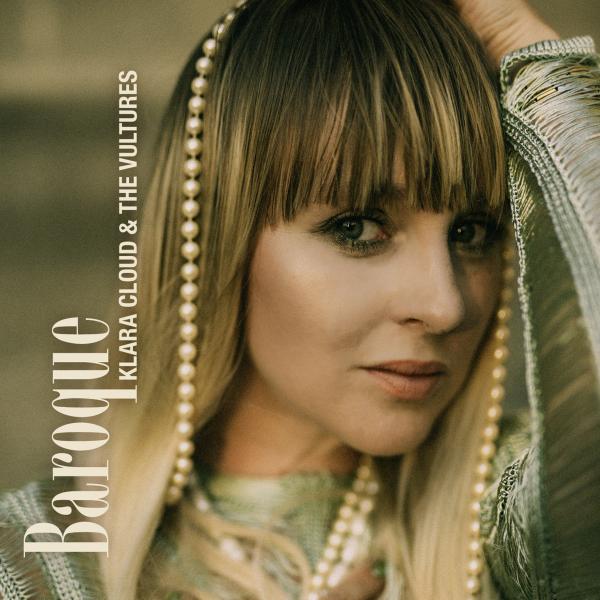
KLARA CLOUD AND THE VULTURES: Baroque (Double Moon Records)

“Polyphony, contrast, expression” – these timeless characteristics of the Baroque era form the conceptual point of departure for Baroque, the new project by Klara Cloud & The Vultures. Yet instead of historical reconstruction, what emerges here is a modern, deeply personal sonic world – a musical narrative that stretches from the first stirrings of life to its quiet fading. The album is conceived as an emotional journey. Memories, transformation, and inner movement coalesce into an atmospherically dense composition that feels both intimate and expansively structured. Klara Cloud is supported by an outstanding ensemble: Mateusz Smoczyński (violin), Mateusz Gawęda (piano), Adam Tadel (double bass), Piotr Budniak (drums), and guest violinist Bartosz Dworak. These musicians lend the vision both chamber-like subtlety and orchestral grandeur. Yet Klara Cloud remains unmistakably at the center. Her voice carries the entire work – every phrase, every vocalise, every sung word feels deliberate and emotionally charged. The instrumental parts – precise, nuanced, and masterfully performed – do not serve self-display, but instead create a resonant space for the compositions. The arrangements are carefully balanced, sonically cohesive, and dramaturgically refined. Listening to the album evokes the sensation of entering another sphere – a fairy-tale-like, almost transcendent world. And yet everything remains tangible, emotionally immediate. Baroque oscillates between lyrical delicacy and raw intensity, between fragility and determination. Produced by Klara Cloud herself and recorded at the Polish Sound & Wave studio, the album clearly bears her artistic signature. Its dedication to her children – Stefania and Julian – adds an additional personal dimension. It feels like a musical diary that simultaneously reflects universal themes of transformation, beauty, and transience. Baroque is a multilayered album that organically connects jazz, chamber music, and baroque-inspired elements. An artistically ambitious production that impresses through its cohesion, emotional depth, and distinctive stylistic voice.
Bega Villalobos, In&OutJazzMagazine (Spain)

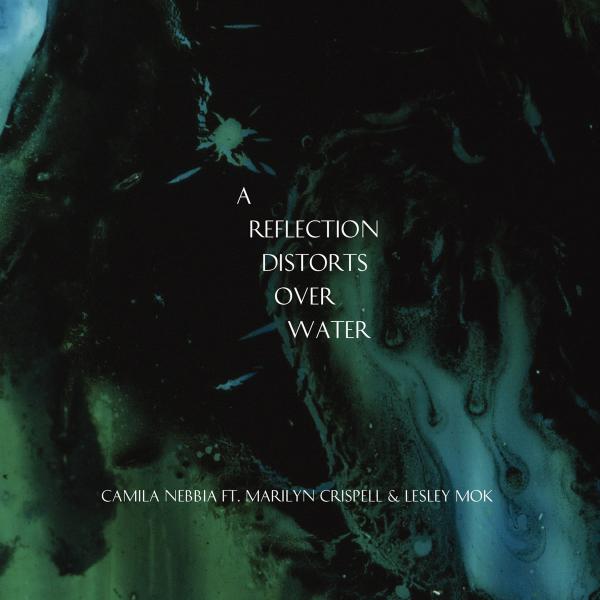
CAMILA NEBBIA / MARILYN CRISPELL / LESLEY MOK: A Reflection Distorts over Water (Relative Pitch Records)

From the very first minute of “Driving through Flood Water,” the opener of A Reflection Distorts over Water, the listener is led to enter a trance-like state, where all that is felt is abject beauty and the slightest brush of unease. “Flood Water” presents a prolonged reconciliation of mastery and patience, filled with vivid overtones and elliptical shapes. And just about the only thing you can feel through this induced trance, aside from your own pulse, is that the three players converging on this piece are locked into a single instinctual arc, their reciprocity briefly suspending them in time. And what players they are!! The trio assembled here all occupy the upper strata of free improvisation – Argentine saxophonist Camila Nebbia and Brooklyn-based percussionist Lesley Mok are both perpetually ascending forces in the avant-garde, known for elastic and highly textural playing styles that favour open scores and extended techniques, respectively. And Marilyn Crispell would hardly need an introduction to anyone even remotely attuned to the experimental realm – the legendary pianist has stood at the forefront of improvised music for over four decades, and her virtuosic and highly incendiary playing has run the gamut of the volatile and dense (during her time as the harmonic lynchpin of the Anthony Braxton Quartet), to the distinctly lyrical embrace of negative spaces she explored in the latter half of her storied career. A Reflection Distorts over Water, the trio’s debut in this formation, plays out like a series of tone poems, with the mood and playing styles of each piece reflecting its title, or vice versa. True to its name, “There is No Land” feels untethered and lost, a wandering quality that is largely projected through Nebbia’s tenor sax. Heavy on the altissimo, her pinched playing invokes the anxious sensation of facing vast unoccupied space. On “Suspended Time,” Crispell unleashes a fragmentary matrix of tone clusters that brings to mind the visceral ferocity of Cecil Taylor. Mok splices in some spiky snare-work, and Nebbia alternates between sharp punctuation and painterly drags. The piece is a dizzying display of tension, with the trio varying their rhythms and tempos completely independent of each other, weaving together a strained wire that always feels like it’s about to snap. On the stifling “A Room is Being Erased,” Nebbia employs a dampening technique, and though you can feel how intensely the saxophone is being played, it reaches you in choked, panicked gusts. This allows Crispell to float her crystalline playing to the forefront. And the gorgeous closer “Streamside” becomes the personification of fluid dynamics, the movement of water reflected in both the playing style of the trio, and the tonal quality achieved. Despite its relatively curt length, the album packs an intense amount of technical exquisiteness, avant-grit and projected tactility into its runtime. As would be expected with the amount of talent gathered here, A Reflection Distorts over Water is an incredible foray into how both salvaging and oppressive texture can be. And as Mok, Nebbia and Crispell reach for this multitude again and again, with able hands and lungs, everything falls perfectly into place. (Khagan Aslanov)

Mike Flynn, Jazzwise (UK)

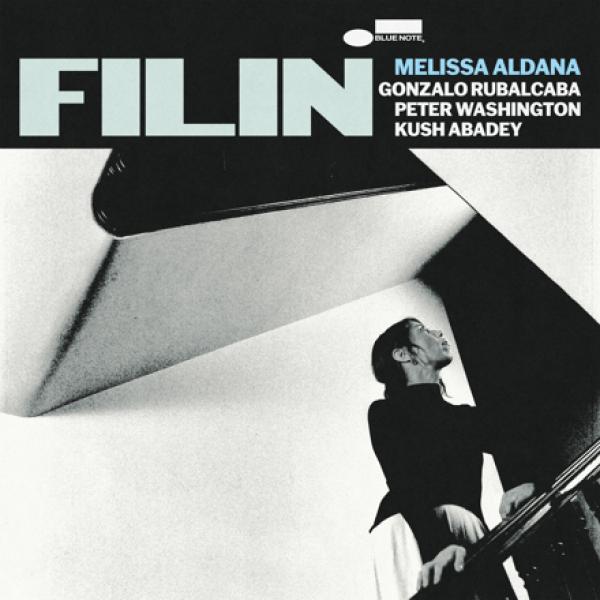
MELISSA ALDANA: Filin (Blue Note)

Paweł Brodowski, Jazz Forum (Poland)

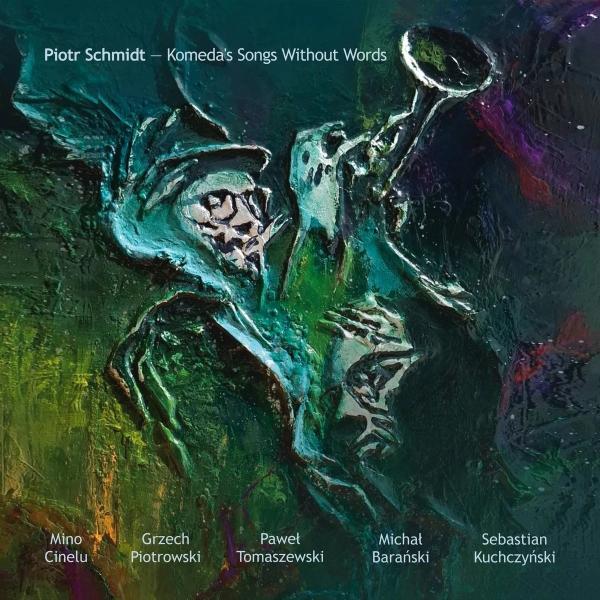
PIOTR SCHMIDT: Komeda’s Songs Without Words (SJRecords)

The influence of Krzysztof Komeda on Polish jazz has been so overwhelming that there seems no end to ever new interpretations of his music. The legendary pianist was first and foremost a great composer rememberd for his ingenious film scores. But he also left behind a handful of beautiful, melodic songs that became popular music hits. Now comes this new album extending Komeda’s legacy. Piotr Schmidt’s Komeda’s Songs Without Words is a live recording of the project comissioned by the Love Polish Jazz Festival in Tomaszów Mazowiecki and premiered in September 2024. The Piotr Schmidt Sextet is a group of top Polish jazz musicians with the leader on trumpet, Grzech Piotrowski na saxophone, Paweł Tomaszewski on piano, Michał Barański on bass, and Sebastian Kuchczyński on drums, joined by the French master percussionist Mino Cinelu, adding color and muscle. There is a chemistry and improvisations are inspired. The trumpet and saxophone are taking the lead, singing and crying like a human voice. The music captures Komeda’s specific atmoshphere, which is hard to describe but felt and recognized instantly – the feeling of nostalgia, longing, regret, anxiety. There are seven songs on this album. Some of them: the opening tune “Z ręką na gardle” (With his hand on his throat) comes from Jerzy Skolimowski’s 1966 psychological drama “Barrier”, a theme from his 1967 “Le Depart” was sung in the movie by Christiane Legrand, “Nim wstanie dzień” (Before the the day breaks) comes from the Polish „eastern” – “The Law and the Fist” (1964), “One Hundred Years” is a ballad from Buzz Kulik’s „The Riot” (1969), a film about an escape from a state prison – it is actually Komeda’s very last movie score, written just before he fell into a coma which led to his untimely death at age 39. Komeda lives on.

Krzysztof Komorek, Donos kulturalny (Poland)

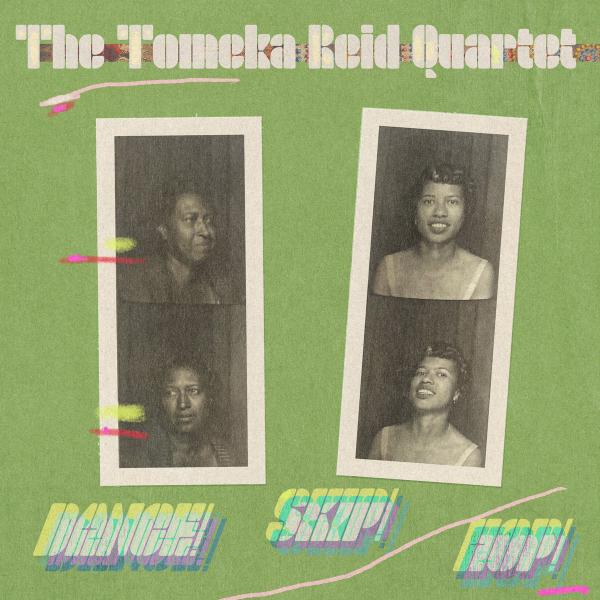
THE TOMEKA REID QUARTET: dance! skip! hop! (Out of Your Head Records)

Tomeka Reid's star-studded quartet offers the listener a set of compositions full of energy, rhythm, fun, and surprises. It's an album that makes it impossible to get bored. The music can be sophisticated and surprisingly accessible at the same time.

Jan Granlie, Salt-peanuts.eu (Norway)

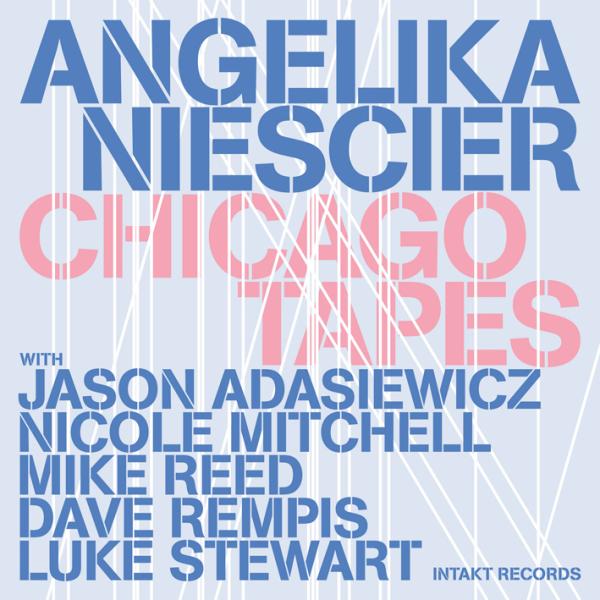
ANGELIKA NIESCIER: Chicago Tapes (Intakt Records)

Saxophonist Angelika Niescier is originally from Poland, but has lived in Cologne for many years, where since the turn of the millennium she has been one of Germany's leading alto saxophonists. She has participated in a number of exciting projects, both in Germany and internationally, and on her new release, Chicago Tapes, which was recorded at Transient Sound Studio in Chicago, she brings with her vibraphonist Jason Adasiewicz, flutist Nicole Mitchell, alto and tenor saxophonists Dave Rempis, bassist Luke Stewart and drummer Mike Reed. This is the most exciting release I have heard from Niescier to date, with a band that pushes and kicks in many directions, and that puts itself at the forefront of releases from Chicago in recent years.

Christine Stephan, JAZZTHETIK (Germany)

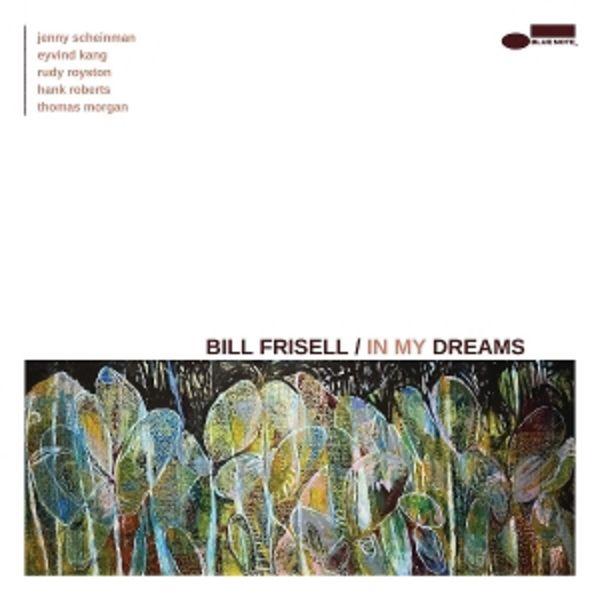
BILL FRISELL: In My Dreams (Blue Note)

Dick Hovenga, Written in Music (Netherlands)

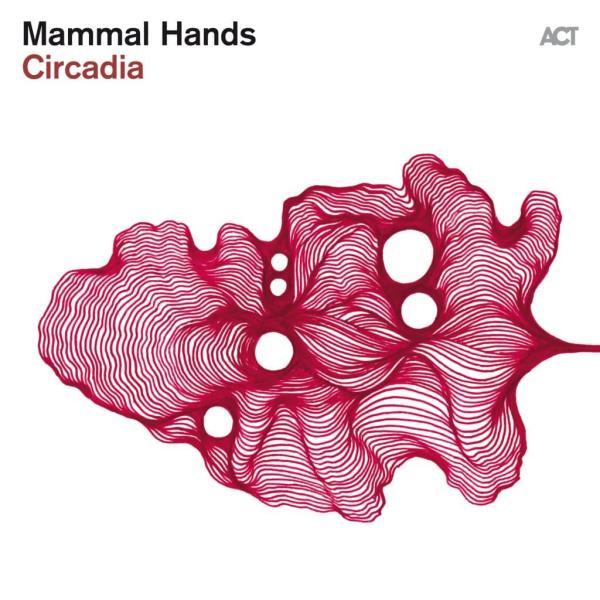
MAMMAL HANDS: Circadia (ACT)

With their sixth album Circadia, Mammal Hands is taking big and surprising new steps. Not only because brothers Nick (piano) and Jordan (sax) Smart found the ideal successor to Jesse Barrett (drummer from the beginning) in Rob Turner (formerly of Gogo Penguin), but also because after five albums on Manchester's Gondwana Records, they found a new home with the German label ACT. The changes yielded a treasure trove of new inspiration that found its way out in perfect trinity. Nick's classically trained sound, Jordan's saxophone with its thousands of recognizable melancholic tones, and Turner's ever-innovative, inimitable drumming give Mammal Hands new wings on Circadia.

Viktor Bensusan, Jazzdergisi.com (Turkey)

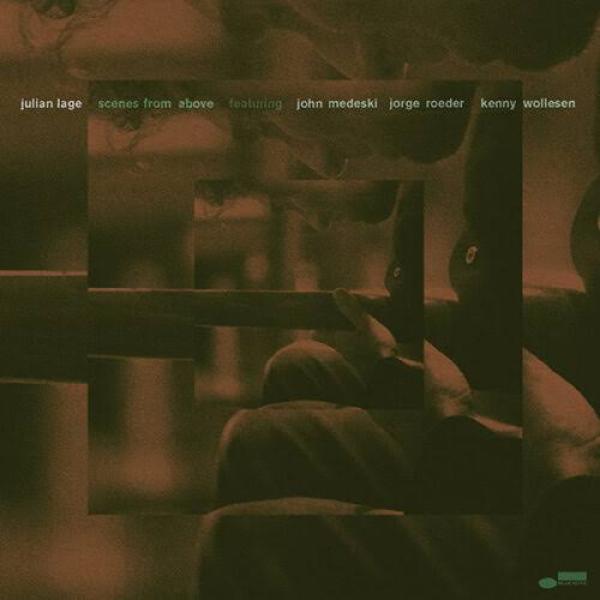
JULIAN LAGE: Scenes From Above (Blue Note)

This album for me is a Brucknerian Americana at a Burrellian jazz setting. Lage and Medesky elevates us Above, while Roeder and Wollesen make sure that we stay there and listen to all the Scenes.

Nuno Catarino, Jazz.pt (Portugal)

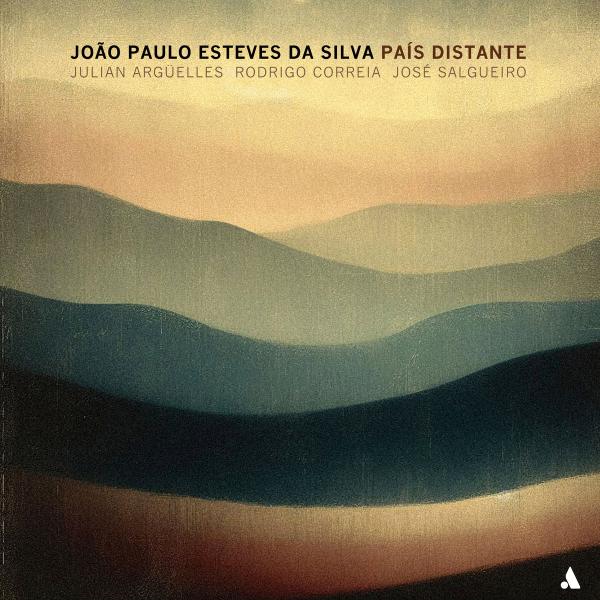
JOÃO PAULO ESTEVES DA SILVA: País Distante (Artway Jazz)

Thirty years later, João Paulo Esteves da Silva returns to the quartet format, reuniting with long-time colleague José Salgueiro on drums, with Rodrigo Correia on double bass and Julian Argüelles on saxophone. If Portugal was a very different country three decades ago, Esteves da Silva’s music has likewise evolved, with the pianist gradually deepening his exploration of free improvisation. The quartet creates a distinctive sound that combines the tension and turbulence of improvisation with melodic colour and a strong sense of Portuguese identity — hallmarks of the pianist’s work.

Henning Bolte, freelance (Netherlands)

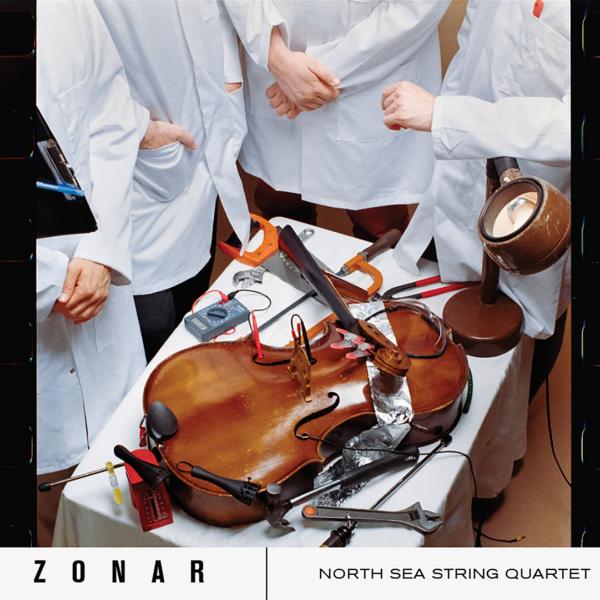
NORTH SEA STRING QUARTET: Zonar (Happy Seal Records)

North Sea String Quartet that is George Dumitrio, Pablo Rodriguez, Yanna Pelser, and Thomas van Geelen from Amstetdam/Rotterdam. There is practically nothing in jazz and free musics that they don’t dare to tackle and no instrumental sound they leave out to emulate. In short, they are putting the venerable old unity of the string quartet to the test. While last year the Hemphill Stringtet translated Julius Hemphill’s heavy horns in string quartet format, on “Zonar” there is no longer a connecting bracket. They rather proceeded as shown in Rembrandt’s “Anatomic Lesson” but then for our ears and limbs expanding into a great surprising variety of directions (of perplexingly astonishing strings’ soundings). Give the alertness of your ears this dynamic treat into inventive new listening paths.

Peter Slavid, UK Jazz News (UK)

DAVE HOLLAND, NORMA WINSTONE AND THE LONDON VOCAL PROJECT: Vital Spark - Music of Kenny Wheeler (Edition)

It’s over ten years since Kenny Wheeler’s death, but his music is enjoying something of a renaissance – notably with the recent Grammy nomination for Some Days are Better. This project brings together some outstanding musicians who worked with him, fronted by the astonishing voice of Norma Winstone. Arranged by Pete Churchill with Dave Holland on bass, Nikki Iles on piano, James Maddren on drums, Mark Lockheart on saxes and John Parricelli on guitar. UKJN reviewer Mike Collins wrote: “The heart-dropping harmonic shifts are quintessential Wheeler and evoke first a glowing exploration from Holland on bass who then hands a sinuous phrase on to Iles on piano, whose solo soars on the wings of the choir, another great moment.  There’s treasure trove of such moments in the hour of music on this recording that repays repeated listening.”

Lars Mossefinn, Dag og tid (Norway)

TORE BRUNBORG TRIO: Malm (Diger)

Patrik Sandberg, Orkesterjournalen (Sweden)

PAT METHENY: Side-Eye III+ (Uniquity Music)

Pat Metheny returns with Side-Eye III+, the first release on his newly formed label, Uniquity Music. The album is a significant evolution of Metheny's long-running Side-Eye project, building on the concept he created as a platform to showcase extraordinary young talent from his musical circle. At its core, the album captures the intuitive interplay between Metheny, keyboardist Chris Fishman, and drummer Joe Dyson. The music  revealed a larger vision that required a broader orchestral expression. To realize this more expansive sound, Metheny expanded the group with additional musicians, including bassist Daryl Johns, harpist Brandee Younger, percussionist Luis Conte, and a vocal ensemble led by Mark Kibble of Take 6.

Cim Meyer, All That... (Denmark)

MUSINA EBOBISSÉ QUINTET: Engrams (Jazzdor Series)

The French saxophonist Musina Ebobissé (born 1990) comes from a musical family. He has studied in both France and Germany and has been taught by Peter Weniger, John Hollenbeck, Jim Black, Kurt Rosenwinkel and Greg Cohen, among others. Despite his young age, Ebobissé has 13 albums in his “backpack” – six of them as a leader. ENGRAMS is a subtle mix of tradition and adventurousness, but with clear and distinct expressions. Rhythms are mixed (Opium Hill), eighths are solidly marked (Class Strugle), and energy levels are maximized (ZIF268). Hair in the soup: Tenor and alto saxophonist sound pretty similar, and there’s plenty of distortion on the guitar. Nevertheless, the group leaves a lasting imprint. Olga Amelchenko (as), Musina Ebobissé (ts), Povel Widestrand (p), Igor Spalatti (b), Moritz Baumgärtner (d).

Matthieu Jouan, Citizenjazz.com (France)

NICOLAS LEIRTRØ ACTION NOW!: Entrance (Sauajazz)

Bassist Nicolas Leirtrø has assembled the perfect quartet for this album. He is familiar with the musicians, Kit Downes, Mats Gustafsson and Veslemøy Narvesen, and their ability to understand the meaning of music and keep it at a high level of excellence. With this recording, released on the young Sauajazz label, the bassist composes and produces a versatile work that is as light as it is dense, as volcanic as it is ethereal. Magnificent.

Axel Stinshoff, Jazz thing (Germany)

SHAKE STEW: Ten One Two (Traumton)

Luca Vitali, Giornale della Musica (Italy)

PAT THOMAS AND XT: Strata, Act (Joy Contemporary)* (WeJazz Records)

Yves Tassin, JazzMania (Belgium)

ALEX BEAURAIN TRIO: Songa (Mogno)

On a tightrope between dream and reality, this music is pure poetry. (Pierre Dulieu)

Jos Demol, jazzhalo.be (Belgim)

KIN GAJO: Tsuki (W.E.R.F.)

Kin Gajo also guarantees a turbulent musical experience live. They reinforce, distort, and extrapolate the material that makes their album so strong. (Georges Tonla Briquet)

Kaspars Zavileiskis, Jazzin.lv (Latvia)

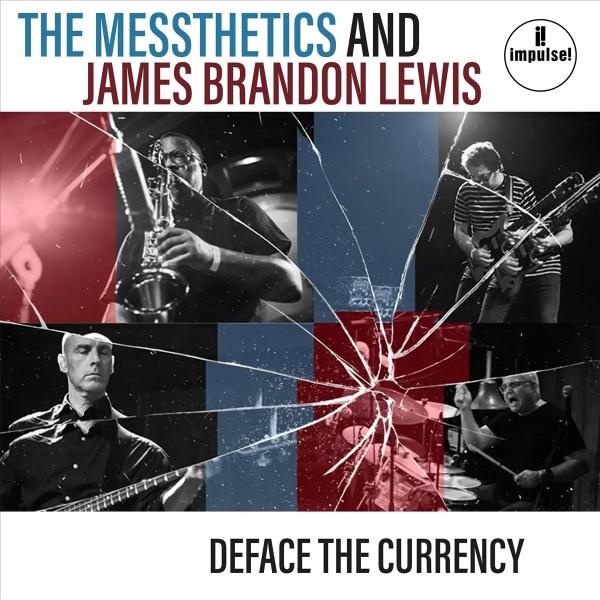
THE MESSTHETICS AND JAMES BRANDON LEWIS: Deface the Currency (Impulse! Records)

Punk and rock attitude lovers The Messthetics meet with jazz and experimental depth lover James Brandon Lewis in the recording studio for the second time. One album wasn’t enough, as evidenced by the many joint concerts, and that’s a joy. Rock band Fugazi bassist Joe Lally and drummer Brendan Canty have played great together with free-thinking guitarist Anthony Pirog, but it’s James Brandon Lewis’s opening of the floodgates in this joint project that excites the most. It sounds like a very organic genre fusion, where each musician doesn’t pull the sheet to their own side, but all together builds a stylish bed from scratch. Whether to roll in it or run away from it is up to each music lover to decide. One thing is clear – there won’t be a peaceful night in it! All that’s left to do is listen to Diogenes and deface the currency, or in this case – destroy jazz conventions...