Back to list


Women to the Fore #21: Anne Erm

We talk to Anne Erm, musicologist, founder of Jazzkaar Festival, artistic director, and widely regarded as the ‘mother of Estonian jazz’. She's also a composer and broadcaster.
What led you to music as a young person? How did your love of jazz and creative music begin?
At first, it was influenced by my family. My mother had a very nice voice, and sometimes she opened the choral and folk dance festival in our town, Pärnu. My father played piano and violin – they both were teachers. My older brother, ten years older than me, was a graduate of the music school. I tried things out on the piano myself – I created different characters – then I enrolled in the music school in Pärnu for more formal training.
After I graduated from the music school in Pärnu at 16, I moved to the capital to study at Tallinn School of Music. I didn't continue with piano in the end, as my little finger is smaller than usual, and I started to study musicology instead.
At music school, we had four pianists in our class who played jazz – they improvised and were at a good level. At the time, it wasn’t really possible to listen to foreign jazz music, but one of our piano players had a collection at home of foreign musicians like Bill Evans, Stan Getz, Oscar Peterson, and we started to listen to jazz.
In the 1960s, Tallinn became the jazz capital of the Soviet Union. A jazz festival started in 1959, with its most famous and international editions taking place in 1966 and 1967.
In 1966, the headliner was Jan Johansson, the pianist and composer from Sweden – he played national songs in jazz arrangements. This inspired Uno Naissoo, composer and founder of the Rhythmic Music Department at the School of Music. He wrote the first books in Estonia about jazz harmony and improvisation.
I was also at the festival in 1967 listening to these concerts, including the Charles Lloyd quartet, with Keith Jarrett. This time it was the biggest international jazz festival in the Soviet Union. Everyone wrote about this event, and the next year it was cancelled by the Communist Party. This is how my life in jazz started.
How did your early career develop? First as a performer/composer, then as a radio presenter/journalist?
The serious period started from music school in Tallinn, and continued in the conservatory when we founded a vocal group called Collage. We sang folk songs and jazz songs, and there was a plan to perform at Tallinn Festival '68, but the festival was cancelled.
When I graduated from music school, they asked me to stay to teach music history. I taught for four or five years and at the same time studied composition at the conservatory. I graduated with my piece Sinfonietta – the Radio Symphony Orchestra played it in a summer concert.
Aarne Vahuri, the leader of Collage, who worked at Estonian Radio, invited me to do some presenting. First, I did some concerts, and 18 months later, I became full-time. I did everything – morning programmes, night programmes, programmes about Estonian contemporary composers etc.
I worked with Valter Ojakäär, who was like a jazz encyclopedia and an important person in Estonian jazz. When he stopped hosting the jazz programme, I started to make radio programmes about jazz in the Soviet Union. I visited festivals in Tbilisi, Yerevan, Moscow, everywhere, and soon I came to know the musicians and music critics personally. It was a very interesting period. In the end, I worked in radio for more than 50 years.
Can you tell us more about your role in radio, and the influence of radio in the development of the jazz/creative music scene in Estonia?
In the times of Valter Ojakäär, who wrote five books about Estonian music, and the first jazz book in the Soviet Union, people had one single route to listen to jazz – if not foreign radio stations or Finnish TV radio, there was only our radio station. So radio influenced the jazz scene a lot.
There was also a Radio Big Band. The last conductors, Gustav Kikerpuu and Paul Mägi, loved jazz and arranged Estonian songs in jazz arrangements. They also performed at the first Jazzkaar festival. But since the mid-1990s, we haven't had a professional jazz orchestra in Estonia.
In my radio programmes, I would highlight new albums, mainly classical, and when possible, I chose jazz LPs as well. Usually these were from Poland, Czechoslovakia or Cuba, as in record shops it wasn’t possible to get any from European countries or America. When I visited other radios from Tbilisi or Moscow, I always brought back some interesting music. Things were a bit crazy, and re-recorded music from other sources was played on the radio. In 1986, they opened a stereo channel of the radio station and got hold of 100 or so LPs from abroad, so we had more choice of what to play. As the years went by, the situation improved and there was much more music to broadcast on the radio.
I ended up hosting a weekly jazz programme called Evening Jazz for many years, where I highlighted new music from Estonia, festivals I had visited, artists from Europe and America.
You set up Jazzkaar in 1990, when Estonia was still part of the Soviet Union. What led you to start the festival? What were the most significant challenges in the early days? And what became possible when Estonia restored its independence?
The idea for Jazzkaar came because when I visited festivals in the Soviet Union, musicians always asked, why don't you have any festivals in Tallinn? In the end, I said to one Georgian blues band, I'll try to do something.
The Estonian Philharmonic Concert organisation was also discussing how to restore the festival, but nothing happened. One day, I bumped into the director of the Philharmonic, and I said, let's do the festival again. He agreed.
I did the programming, but we needed to find the money. At the first festival, we had about 50 supporters. Most didn't give money, but gave other forms of help. I had no formal agreement with the Estonian Philharmonic organisation, and no knowledge of how much they got, or how they spent the money. I ended up in personal debt after the festival and didn't sleep for about three months, wondering how to pay it back. It happened the second year as well. Gradually, I paid off all our debts and got everything back on track.
But then, when freedom came for Estonia, the first Minister of Culture, a composer called Lepo Sumera, said to me, it's time to create your own organisation. So I created the non-profit organisation, Jazzkaar Friends Society, that organises the festival, and it still exists today.
There were many challenges, mainly that Estonia was so young as a country. For our first few years, there weren’t any systems in place to support festivals. I also had to decide what kind of artists to invite to Estonia – I had some helpers, musicians from abroad I knew, who suggested certain artists. We worked with fax machines; we didn't have enough typewriters or even access to any correction fluid to fix mistakes in letters.
The first Jazzkaar was in 1990, one year before independence, and the second one was just after independence, and even with the third festival, there was still no national organisation or support for culture. The Estonian Cultural Foundation didn’t exist yet. It was restored in 1994 and things started to get easier, and with the rise of the internet, it was easier to find artists and communicate.
But the best way to select artists is to listen to live concerts and feel your own emotional response. In the early days, there was very little money to do this. The first festival I was invited to was Pori Jazz in Finland, and I had to sleep under newspapers in the backstage area of the sports hall. There was no budget for hotels.
Have you experienced any particular challenges as a woman in the world of jazz? Have things changed for the better, and/or what changes would you still like to see?
In my mind, it doesn't matter if you are a woman or if you are a man. We are all the same. The main thing is the knowledge and contacts you have, how deeply you feel the music, and how you plan the work.
Fortunately, with jazz musicians, I haven't come across any that would be angry or jealous that one crazy woman is doing a festival. They are always very helpful and open.
We are lucky in Estonia nowadays to have excellent women jazz musicians - the gender balance is there naturally: Kirke Karja, Kadri Voorand, Mingo Rajandi, Maria Faust. With Maria Faust, we presented her concerts maybe 15 times – at the beginning, there were maybe 20 or 30 people, but now the halls are full.
It’s very helpful that for the last 30 years or so, Estonian musicians have been able to study abroad, and our music academy now offers a high-level jazz education. Our good partner, the Estonian Jazz Union, organises concerts around Estonia, so all Estonians know what jazz is.
You're widely regarded as the 'mother of jazz' in Estonia. What do you see as the most exciting evolutions in the Estonian jazz scene over the course of your career? How has its profile at home and internationally changed? What do you want to see in the future?
Our musicians are more professionalised now. They have more work, they are studying abroad, and a lot of them have international bands and are playing with Finnish, Lithuanian, Latvian, American, Dutch musicians. They met either in the music schools where they studied, or often at Jazzkaar – some musicians even met their spouses at Jazzkaar!
There are a lot of possibilities for music and artists, many more than 36 years ago. All doors are open, and success depends on hard work and talent.
For the future of Estonian jazz, we need to find our own way. We know that Scandinavian jazz has this certain touch - for example, Norwegian jazz – but Estonian jazz depends more on talented individuals. Right now, we don't have that distinct Estonian style, and I’d like to see that develop more.
I would also like to see more cooperation – for example, the young generation of classical musicians or folk musicians collaborating with jazz musicians, or vice versa. This mixing of jazz, classical and folk has been typical in our past, and I think it will be in the future as well.
The basis of folk music in Estonia runs very deep, from runo songs [the earliest form of Estonian traditional music] to the works of one of our most important composers, Veljo Tormis. You can also see how runo has influenced rock music in some bands and jazz as well – as I already did in the vocal group Collage.
Can you tell us about the ways in which you have mentored and nurtured artists and new generations of Estonian and Baltic musicians?
We try as much as possible to take young musicians into our festival programmes, and they start at different levels. At first, they are playing free concerts in city spaces – schools, hospitals, shopping centres.
At the next level, there are free days of the festival where young musicians studying at MUBA – the Tallinn School of Music and Ballet – can play on the first Sunday of our festival. At the third level, the most talented young musicians will play in our smaller hall, at Fotografiska Tallinn. Young musicians get free tickets to the festival and see famous artists in Estonia. We often have workshops for young musicians too.
We try to inspire musicians to write new music through commissioning new work. For more than 15 years, our opening concerts have featured new work by jazz composers, and these can be fantastic events. Like the project “The story of one hundred” – this was created for the anniversary of Estonia, and at the same time, a photo book was published with stories of 100 Estonians, of all ages, from different places.
Our Jazzkaar audience has a young profile compared to jazz audiences in other parts of Europe: age between 40-45 and 65% female. To get even younger audiences into jazz, we created the children's festival, Kräsh, which takes place every June.
I have a much younger team around me at the festival now. They have new ideas, and we’ve had some very interesting projects.
What advice would you give to young people who want to succeed in the creative music scene, whether as artists or behind the scenes?
At first, you must love music and work very hard to reach the highest level – much like a ballerina or figure skater. And don't be afraid of difficulties. You must come through these difficulties to understand life and to understand what you really like.
When you are a festival organiser or producer, your job is to deal with challenges and concerns every single day, and to constantly look for ways to solve them. The pressure and responsibility aren’t for everyone, and that’s completely okay. With kindness and a spirit of cooperation, you can always achieve more. Staying calm and giving your best is always worthwhile.
The renowned Estonian writer Anton Hansen Tammsaare once said: “Do the work and the love will come.” To this I would add: “Do the work with love, and your audience will more deeply understand your work in music.”
Which female or non-binary composers and artists are you most excited about at the moment?
From Estonia – Kirke Karja, Maria Faust, Kadri Voorandi, Mingo Rajandi, Bianca Rantala, Rahel Talts.
From Finland – Linda Fredriksen.
From Norway – Hanna Paulsberg, Kristin Asbjörnsen, Solveig Sljettahe
The next edition of Jazzkaar Festival takes place from 25 April to 2 May 2026.
List of awards:
1997 – Estonian Public Broadcasting Award “Golden Microphone” for promoting culture through music programmes
1999 – Annual Award of the Endowment for Music of the Cultural Endowment of Estonia (for the Jazzkaar Festival)
2001 – Order of the City of Tallinn
2002 – Order of the White Star, IV Class (Republic of Estonia)
2003 – Annual Award of the Endowment for Music of the Cultural Endowment of Estonia (for the development of jazz life in Estonia)
2006 – Knight of the Order of Arts and Letters (France). Awarded for dedicating one of her first radio programmes to Édith Piaf and for initiating recordings of French music — particularly chansons — performed by Estonian singers and the Estonian Radio Orchestra.
2010 – Estonian Music Council Music Award (for long-term contribution to jazz)
2013 – Estonian Music Awards Lifetime Achievement Award
2018 – Lifetime Achievement Award of the Endowment for Music of the Cultural Endowment of Estonia (for building and developing jazz life in Estonia)
2023 – National Lifetime Achievement Award for Culture (Republic of Estonia)
2025 – Postimees Newspaper "Kultuurivedur" Award
What led you to music as a young person? How did your love of jazz and creative music begin?
At first, it was influenced by my family. My mother had a very nice voice, and sometimes she opened the choral and folk dance festival in our town, Pärnu. My father played piano and violin – they both were teachers. My older brother, ten years older than me, was a graduate of the music school. I tried things out on the piano myself – I created different characters – then I enrolled in the music school in Pärnu for more formal training.
After I graduated from the music school in Pärnu at 16, I moved to the capital to study at Tallinn School of Music. I didn't continue with piano in the end, as my little finger is smaller than usual, and I started to study musicology instead.
At music school, we had four pianists in our class who played jazz – they improvised and were at a good level. At the time, it wasn’t really possible to listen to foreign jazz music, but one of our piano players had a collection at home of foreign musicians like Bill Evans, Stan Getz, Oscar Peterson, and we started to listen to jazz.
In the 1960s, Tallinn became the jazz capital of the Soviet Union. A jazz festival started in 1959, with its most famous and international editions taking place in 1966 and 1967.
In 1966, the headliner was Jan Johansson, the pianist and composer from Sweden – he played national songs in jazz arrangements. This inspired Uno Naissoo, composer and founder of the Rhythmic Music Department at the School of Music. He wrote the first books in Estonia about jazz harmony and improvisation.
I was also at the festival in 1967 listening to these concerts, including the Charles Lloyd quartet, with Keith Jarrett. This time it was the biggest international jazz festival in the Soviet Union. Everyone wrote about this event, and the next year it was cancelled by the Communist Party. This is how my life in jazz started.
How did your early career develop? First as a performer/composer, then as a radio presenter/journalist?
The serious period started from music school in Tallinn, and continued in the conservatory when we founded a vocal group called Collage. We sang folk songs and jazz songs, and there was a plan to perform at Tallinn Festival '68, but the festival was cancelled.
When I graduated from music school, they asked me to stay to teach music history. I taught for four or five years and at the same time studied composition at the conservatory. I graduated with my piece Sinfonietta – the Radio Symphony Orchestra played it in a summer concert.
Aarne Vahuri, the leader of Collage, who worked at Estonian Radio, invited me to do some presenting. First, I did some concerts, and 18 months later, I became full-time. I did everything – morning programmes, night programmes, programmes about Estonian contemporary composers etc.
I worked with Valter Ojakäär, who was like a jazz encyclopedia and an important person in Estonian jazz. When he stopped hosting the jazz programme, I started to make radio programmes about jazz in the Soviet Union. I visited festivals in Tbilisi, Yerevan, Moscow, everywhere, and soon I came to know the musicians and music critics personally. It was a very interesting period. In the end, I worked in radio for more than 50 years.
Can you tell us more about your role in radio, and the influence of radio in the development of the jazz/creative music scene in Estonia?
In the times of Valter Ojakäär, who wrote five books about Estonian music, and the first jazz book in the Soviet Union, people had one single route to listen to jazz – if not foreign radio stations or Finnish TV radio, there was only our radio station. So radio influenced the jazz scene a lot.
There was also a Radio Big Band. The last conductors, Gustav Kikerpuu and Paul Mägi, loved jazz and arranged Estonian songs in jazz arrangements. They also performed at the first Jazzkaar festival. But since the mid-1990s, we haven't had a professional jazz orchestra in Estonia.
In my radio programmes, I would highlight new albums, mainly classical, and when possible, I chose jazz LPs as well. Usually these were from Poland, Czechoslovakia or Cuba, as in record shops it wasn’t possible to get any from European countries or America. When I visited other radios from Tbilisi or Moscow, I always brought back some interesting music. Things were a bit crazy, and re-recorded music from other sources was played on the radio. In 1986, they opened a stereo channel of the radio station and got hold of 100 or so LPs from abroad, so we had more choice of what to play. As the years went by, the situation improved and there was much more music to broadcast on the radio.
I ended up hosting a weekly jazz programme called Evening Jazz for many years, where I highlighted new music from Estonia, festivals I had visited, artists from Europe and America.
You set up Jazzkaar in 1990, when Estonia was still part of the Soviet Union. What led you to start the festival? What were the most significant challenges in the early days? And what became possible when Estonia restored its independence?
The idea for Jazzkaar came because when I visited festivals in the Soviet Union, musicians always asked, why don't you have any festivals in Tallinn? In the end, I said to one Georgian blues band, I'll try to do something.
The Estonian Philharmonic Concert organisation was also discussing how to restore the festival, but nothing happened. One day, I bumped into the director of the Philharmonic, and I said, let's do the festival again. He agreed.
I did the programming, but we needed to find the money. At the first festival, we had about 50 supporters. Most didn't give money, but gave other forms of help. I had no formal agreement with the Estonian Philharmonic organisation, and no knowledge of how much they got, or how they spent the money. I ended up in personal debt after the festival and didn't sleep for about three months, wondering how to pay it back. It happened the second year as well. Gradually, I paid off all our debts and got everything back on track.
But then, when freedom came for Estonia, the first Minister of Culture, a composer called Lepo Sumera, said to me, it's time to create your own organisation. So I created the non-profit organisation, Jazzkaar Friends Society, that organises the festival, and it still exists today.
There were many challenges, mainly that Estonia was so young as a country. For our first few years, there weren’t any systems in place to support festivals. I also had to decide what kind of artists to invite to Estonia – I had some helpers, musicians from abroad I knew, who suggested certain artists. We worked with fax machines; we didn't have enough typewriters or even access to any correction fluid to fix mistakes in letters.
The first Jazzkaar was in 1990, one year before independence, and the second one was just after independence, and even with the third festival, there was still no national organisation or support for culture. The Estonian Cultural Foundation didn’t exist yet. It was restored in 1994 and things started to get easier, and with the rise of the internet, it was easier to find artists and communicate.
But the best way to select artists is to listen to live concerts and feel your own emotional response. In the early days, there was very little money to do this. The first festival I was invited to was Pori Jazz in Finland, and I had to sleep under newspapers in the backstage area of the sports hall. There was no budget for hotels.
Have you experienced any particular challenges as a woman in the world of jazz? Have things changed for the better, and/or what changes would you still like to see?
In my mind, it doesn't matter if you are a woman or if you are a man. We are all the same. The main thing is the knowledge and contacts you have, how deeply you feel the music, and how you plan the work.
Fortunately, with jazz musicians, I haven't come across any that would be angry or jealous that one crazy woman is doing a festival. They are always very helpful and open.
We are lucky in Estonia nowadays to have excellent women jazz musicians - the gender balance is there naturally: Kirke Karja, Kadri Voorand, Mingo Rajandi, Maria Faust. With Maria Faust, we presented her concerts maybe 15 times – at the beginning, there were maybe 20 or 30 people, but now the halls are full.
It’s very helpful that for the last 30 years or so, Estonian musicians have been able to study abroad, and our music academy now offers a high-level jazz education. Our good partner, the Estonian Jazz Union, organises concerts around Estonia, so all Estonians know what jazz is.
You're widely regarded as the 'mother of jazz' in Estonia. What do you see as the most exciting evolutions in the Estonian jazz scene over the course of your career? How has its profile at home and internationally changed? What do you want to see in the future?
Our musicians are more professionalised now. They have more work, they are studying abroad, and a lot of them have international bands and are playing with Finnish, Lithuanian, Latvian, American, Dutch musicians. They met either in the music schools where they studied, or often at Jazzkaar – some musicians even met their spouses at Jazzkaar!
There are a lot of possibilities for music and artists, many more than 36 years ago. All doors are open, and success depends on hard work and talent.
For the future of Estonian jazz, we need to find our own way. We know that Scandinavian jazz has this certain touch - for example, Norwegian jazz – but Estonian jazz depends more on talented individuals. Right now, we don't have that distinct Estonian style, and I’d like to see that develop more.
I would also like to see more cooperation – for example, the young generation of classical musicians or folk musicians collaborating with jazz musicians, or vice versa. This mixing of jazz, classical and folk has been typical in our past, and I think it will be in the future as well.
The basis of folk music in Estonia runs very deep, from runo songs [the earliest form of Estonian traditional music] to the works of one of our most important composers, Veljo Tormis. You can also see how runo has influenced rock music in some bands and jazz as well – as I already did in the vocal group Collage.
Can you tell us about the ways in which you have mentored and nurtured artists and new generations of Estonian and Baltic musicians?
We try as much as possible to take young musicians into our festival programmes, and they start at different levels. At first, they are playing free concerts in city spaces – schools, hospitals, shopping centres.
At the next level, there are free days of the festival where young musicians studying at MUBA – the Tallinn School of Music and Ballet – can play on the first Sunday of our festival. At the third level, the most talented young musicians will play in our smaller hall, at Fotografiska Tallinn. Young musicians get free tickets to the festival and see famous artists in Estonia. We often have workshops for young musicians too.
We try to inspire musicians to write new music through commissioning new work. For more than 15 years, our opening concerts have featured new work by jazz composers, and these can be fantastic events. Like the project “The story of one hundred” – this was created for the anniversary of Estonia, and at the same time, a photo book was published with stories of 100 Estonians, of all ages, from different places.
Our Jazzkaar audience has a young profile compared to jazz audiences in other parts of Europe: age between 40-45 and 65% female. To get even younger audiences into jazz, we created the children's festival, Kräsh, which takes place every June.
I have a much younger team around me at the festival now. They have new ideas, and we’ve had some very interesting projects.
What advice would you give to young people who want to succeed in the creative music scene, whether as artists or behind the scenes?
At first, you must love music and work very hard to reach the highest level – much like a ballerina or figure skater. And don't be afraid of difficulties. You must come through these difficulties to understand life and to understand what you really like.
When you are a festival organiser or producer, your job is to deal with challenges and concerns every single day, and to constantly look for ways to solve them. The pressure and responsibility aren’t for everyone, and that’s completely okay. With kindness and a spirit of cooperation, you can always achieve more. Staying calm and giving your best is always worthwhile.
The renowned Estonian writer Anton Hansen Tammsaare once said: “Do the work and the love will come.” To this I would add: “Do the work with love, and your audience will more deeply understand your work in music.”
Which female or non-binary composers and artists are you most excited about at the moment?
From Estonia – Kirke Karja, Maria Faust, Kadri Voorandi, Mingo Rajandi, Bianca Rantala, Rahel Talts.
From Finland – Linda Fredriksen.
From Norway – Hanna Paulsberg, Kristin Asbjörnsen, Solveig Sljettahe
The next edition of Jazzkaar Festival takes place from 25 April to 2 May 2026.
List of awards:
1997 – Estonian Public Broadcasting Award “Golden Microphone” for promoting culture through music programmes
1999 – Annual Award of the Endowment for Music of the Cultural Endowment of Estonia (for the Jazzkaar Festival)
2001 – Order of the City of Tallinn
2002 – Order of the White Star, IV Class (Republic of Estonia)
2003 – Annual Award of the Endowment for Music of the Cultural Endowment of Estonia (for the development of jazz life in Estonia)
2006 – Knight of the Order of Arts and Letters (France). Awarded for dedicating one of her first radio programmes to Édith Piaf and for initiating recordings of French music — particularly chansons — performed by Estonian singers and the Estonian Radio Orchestra.
2010 – Estonian Music Council Music Award (for long-term contribution to jazz)
2013 – Estonian Music Awards Lifetime Achievement Award
2018 – Lifetime Achievement Award of the Endowment for Music of the Cultural Endowment of Estonia (for building and developing jazz life in Estonia)
2023 – National Lifetime Achievement Award for Culture (Republic of Estonia)
2025 – Postimees Newspaper "Kultuurivedur" Award
Images:
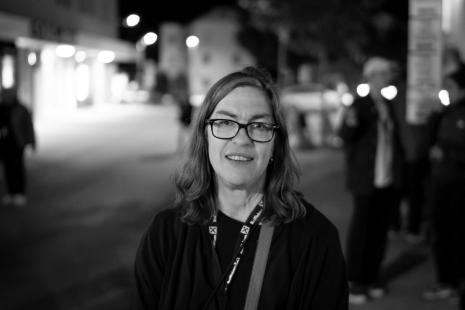
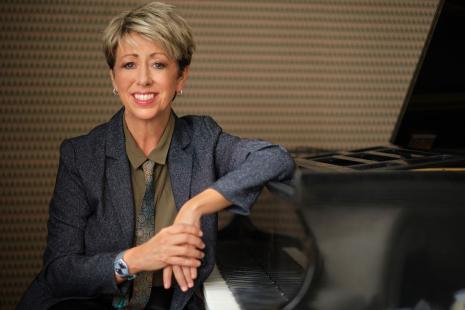
2 & 3 Stina Kase.
2 & 3 Stina Kase.